
We're back in Thailand after eight days in Bhutan. I'm going to break this up a bit so that I don't forget anything. So here's some preamble and the first day.
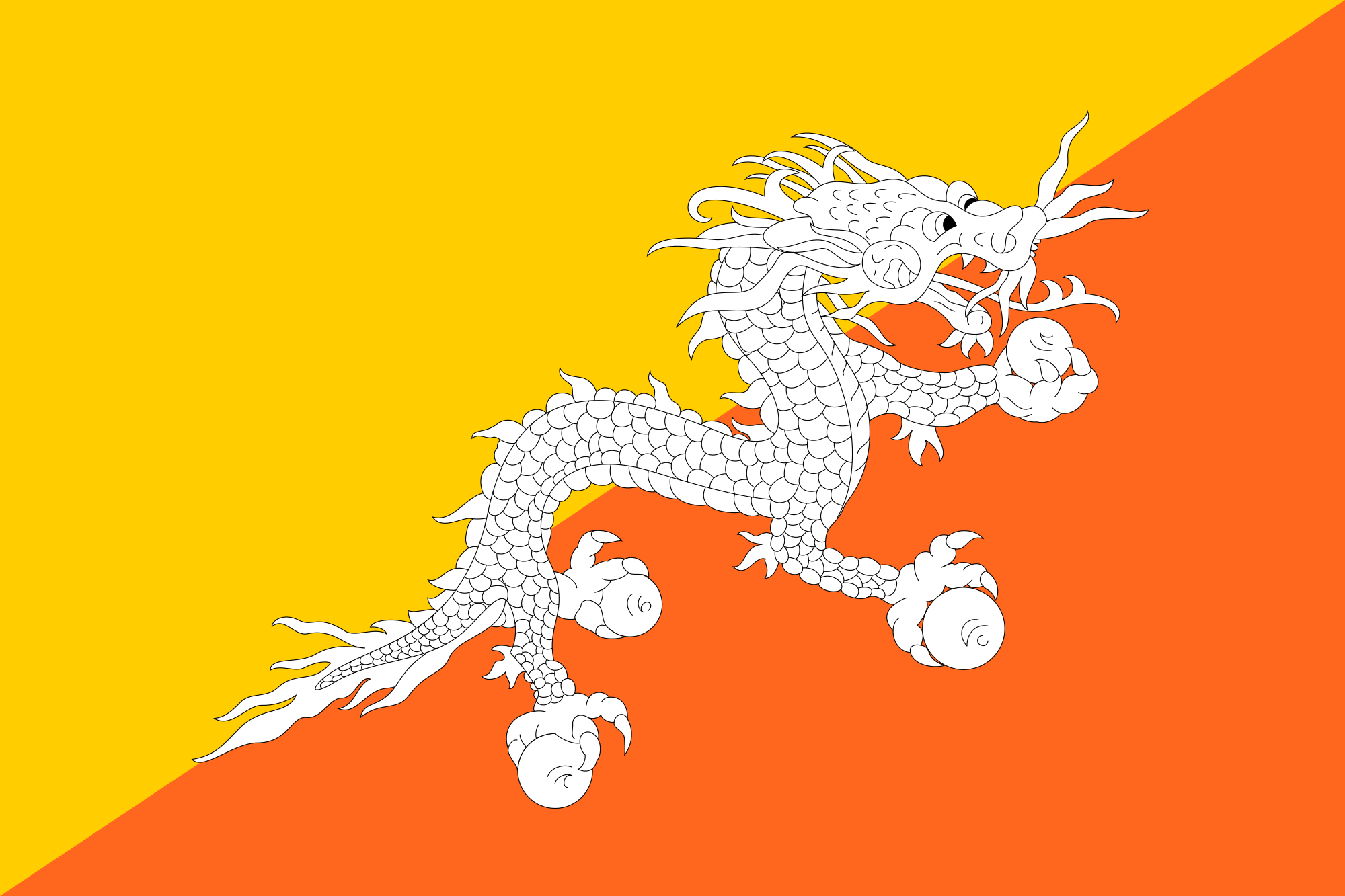
So last time I wrote we were leaving Thailand. Druk Air is the main airline to get you to Paro - the only international airport in Bhutan. Druk is the state-owned carrier, with a fleet of four Airbus 319s and an ATR twin prop. They have a habit of delaying/cancelling flights as the fog over Paro makes an already treacherous run (there are only eight pilots certified to land there) unacceptable. They also bugger off early without warning for similar reasons. This is not good for my nerves.
 |
| "Hey, we've got a schedule to fabricate" |

Bit of history for you:
After several centuries of your typical-for-the-region-and-time-period tribal, religious and imperial upheaval, the present dynasty of the Druk Gyalpo (Dragon King) was established in 1907. Sir Ugyen Wangchuck (a Knight-Commander of the Indian Empire due to some complicated bit of British imperial malarkey prior to this) was elected as hereditary king of Bhutan by the senior chiefs and lamas of the day. The first two kings maintained decent relations with Britain and India in light of Chinese interference in Tibet. They also managed to dodge most of the awfulness of the depression and both wars due to the country’s isolation and barter economy.

The third of the Druk line, Jigme Dorji Wangchuck –the “father of modern Bhutan”- was a particularly progressive character who solidified their relations with India after the Chinese invasion of Tibet and set about implementing wide-scale development of the country by building schools and hospitals, reforming taxation and improving administration. His son, the fourth king, who succeeded when he was only 16, established the policy of Gross National Happiness – taking the country not necessarily down the path of maximum economic growth, but by establishing policy geared towards what he deemed to be the country’s maximum long-term well-being while maintaining the environment and the country's spiritual and cultural identity. That's the plan and it seems to be following through - as far as can be measured, people are genuinely happy and their lives are improving.
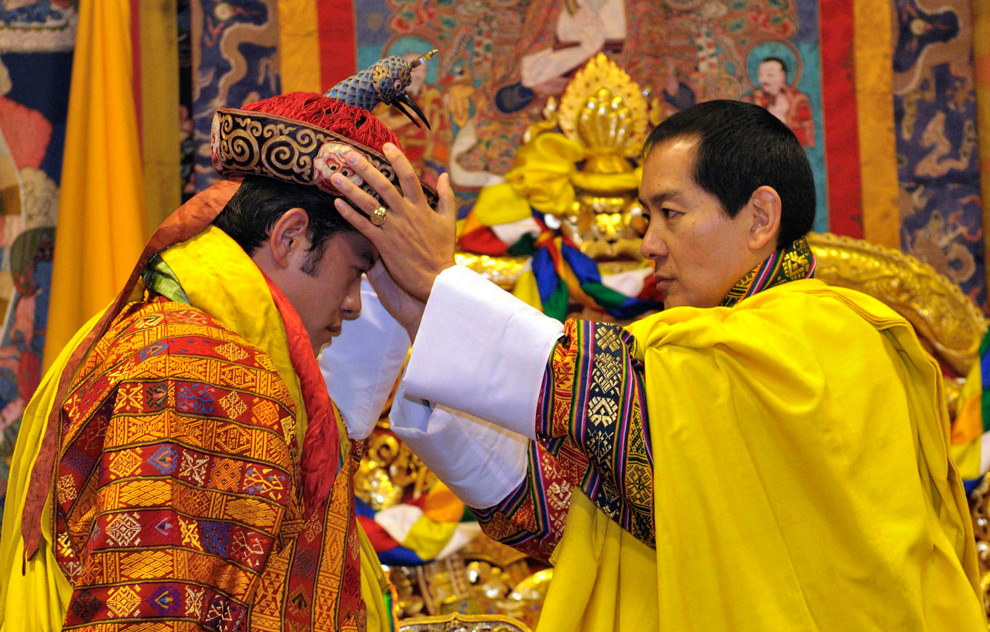
He shocked the nation in 2006 by both abdicating in favour of his eldest son, and by announcing the establishment of a new democratic parliamentary system and constitution. The king coronating another king with the Raven crown is described as 'unprecedented' in the various texts on the subject. Personally I think just about everything is a precedent when there's only been four of you so far.
King number 4 is still alive (and only in his sixties) and acts in an advisory capacity to his son, and between them they have established comprehensive education, healthcare and investment that has brought Bhutan, while still poor and with limited resources, into the 21st century. It is no overstatement to say that he royal family are adored, which is understandable because I've only been here a week and I quite like them too.

Which brings us to now. Tourism in Bhutan is controlled on an “High Value; Low Impact” basis, where they regulate the industry by imposing a high daily tariff on tourists (US$200-$250 per person, per day) from which the government skims $65 to pay for Bhutan’s various projects, and for which the tourist gets a driver, a guide, all accommodation and all meals. Unless you’re Indian or are working here in some capacity, this is the only way in. You can tailor your trip as you like and a tour firm will sort it for you, but you’re not allowed to come in without a guide. An interesting feature is that all fees are paid up-front to one of the Bhutanese government’s various international bank accounts, and the tour firm is not paid until the trip is satisfactorily concluded. Got to be the only government I've actually trusted with my money.

So we arrived in Paro and were met by our guide, Tshultrim, and our driver, Raj.

These guys would be taking care of us for the week. The state trains up all of the tourist staff in the country, so the guides' English and knowledge is excellent, if Tshultrim is any indication. Raj spoke more English than he let on, I think, as he was always smiling but quiet. His main job was to ferry us around the country on roads described by Lonely Planet as 'harrowing'. I dunno about that - we've seen roads in poorer states of repair in Argentina, and traffic in Bangkok which is several shades more demented. But safe to say, the highways become rather idiosyncratic as you leave town, and it's best to have someone local at the wheel.

First thing we did was see the Rinpu dzong and the national museum, which are adjacent to one another. We would see several dzongs - a combination of monastery and fortress- before we left. Historically they formed the fortification of the nation, and are dotted all over the country on strategic hillsides and boundaries. Today they are half monastery and half local government administration centre. Rinpu Dzong dates from the 15th century and is in remarkable nick. This is a feature we'd find about all local architecture: it's made to last. even the more modest farmhouses were and are built the same way - with big bits of wood.


 |
| Butanese (Dzongkha) uses the Tibetan alphabet, which looks like Klingon. |

 |
| I quite liked it |


On the drinks front, you can buy three beers in Bhutan. Red Panda is a Weißbier made by a Swiss immigrant who the King coaxed over to make cheese in Bumthang. He made some beer while he was at it. The other two are made by the imaginatively-named Bhutan Brewery and consist of: Druk Lager, which is a fairly generic lager but is drinkable enough; and Druk 11000 which is 8% by volume (which would safely categorise it as "Tramp Bait" back home) and is a much more interesting animal. It was rather moreish and only about £1.50 for half a litre. I became somewhat partial to that at mealtimes.
The eagle-eyed will note that two of the bottles above are re-used Indian Kingfisher bottles, as they have no bottle-making facilities here. So the shape and colour of your beer bottle will often change day-to-day.
So after lunch and after a reasonably short drive, we stayed in the capital, Thimphu, for the night.

To be continued.

No comments:
Post a Comment