

So then we were in Wellington, the self-titled “Coolest Little Capital in the World”. It’s full of independent bars, eateries and coffee shops. Sadly, being independent, they were unbeholden to franchise requirements and were mostly closed for the festive season until some point in the middle of January (11th to the 14th, most of them). Don’t get me wrong, there was enough open that we didn’t do without, but here we are, trying to support local enterprise and they’ve all tossed it in for two weeks like a pack of ungrateful, workshy bastards.
(Chantelle has just peered over my shoulder and shouted: “Have you said that they were all fucking shut?”)
Anyhoo, after four hours of driving to Wellington and thirty minutes after check-in, I was trying out a beer fight at a local brewery. It agreed.

Coffee in New Zealand has been pretty top drawer so far –especially since I was still reeling from the South American betrayal- and the Kiwi coffee culture has something of a hub in Wellington.
 |
| Understated place. |
So, once we found somewhere open, I tried out some of that too. This here is “coffee three ways” – espresso, flat white (which was invented in New Zealand, by the way) and a cold brew:

We popped into the Museum of New Zealand Te Papa Tongarewa - which is their national museum and art gallery.

They've a fairly eclectic mixture of national and natural exhibits. This is a Colossal Squid for example:
 |
| "Welcome to Earth" |
There was a guest exhibition from Dreamworks, creators of all the animated films you've not seen apart from Shrek, or maybe Madagascar. It was a very informative demonstration of the animation process though, and I really should see How To Train Your Dragon - it looks rather good. And they did put a bit of effort in apparently.


Rough first drafts for Shrek


The Great War has a particular significance to New Zealand, as they were less accustomed to murdering their youth en-masse as we Old World countries were, but also because it marked a cornerstone in their national self-determination. The most infamous and socially resonant of the military engagements in which they and the Aussies were involved was the disastrous campaign at Gallipoli.
The exhibition here (for which there is an excellent companion website) follows the stories of eight Kiwis involved in the conflict by way of interactive displays and exhibits, but more tangibly by way of giant waxwork statues in 2.4:1 scale, dressed and made-up in impeccable detail.


'But more wonderful to me was that the night air was broken vigorously by the Maori war cry of 'Ka mate, ka mate! Ka ora, ka ora!' "We may die, we may die! We may live, we may live!" '
- Captain Peter Buck, the night before Chunuk Bair.
The stories are of a young lieutenant, injured and evacuated in the first assault; a medical officer who manned a field hospital for months before being taking away, ruined by exhaustion; a poor sod condemned to be shot for falling asleep on sentry while recovering from pneumonia, pardoned only to be shot by the Turks three days later; the Maori machine gunners, singing the haka before battle, before being torn to pieces at Chunuk Bair; the nurse serving on a hospital ship, keen to find her brother out in the field, only to discover he was three months dead by way of returned mail; the veteran of the campaign who went on to endure more slaughter for three further years in France.


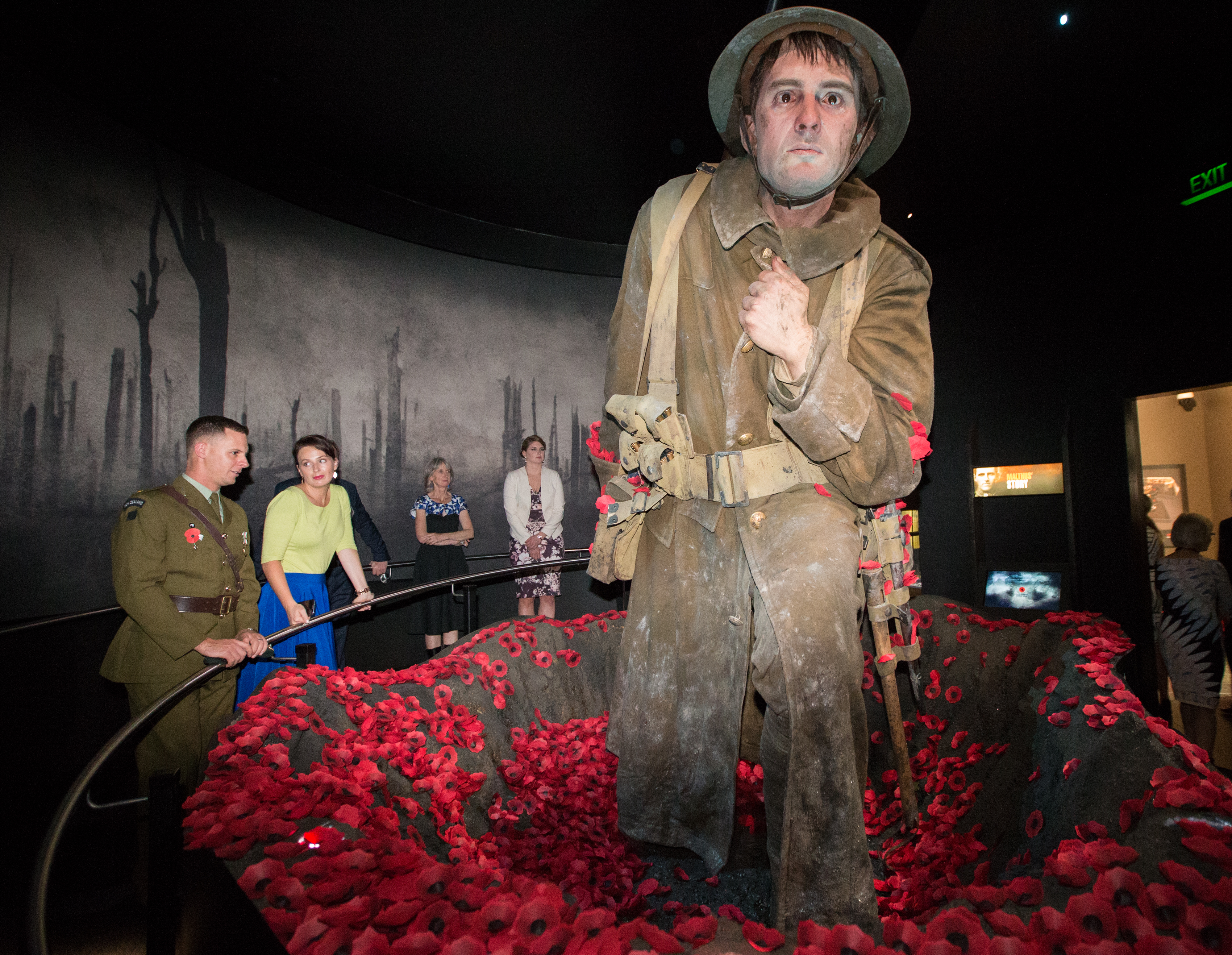
It was poignant, haunting and informative stuff.
A slightly happier item in the collection is this Maori prayer book, which took a Turkish round meant for its owner.
 |
Well done, Good Book.
|
Other exhibits elsewhere in the museum included this also pretty haunting baby thing that you could manipulate with levers. I forget the purpose of it beyond generating sleepless nights for passing children.

Another exhibit discussed the issues around the 1840 Treaty of Waitangi, where we got (most of) the Maori to sign themselves into the club, and become decent citizens of the only empire that matters. Thing is, owing to translational difficulties due to the Maori language having some rather divergent concepts of 'ownership' and 'sovereignty', they are still arguing today about what they signed up for.


Back on the outside, we took the cablecar (which is actually a funicular railway, pulled by cable) to the suburb of Kelburn, which lives on top of the hill overlooking the city. It's been a fixture of the city since 1902 in various forms, first being pulled by horse and then by steam and electric motors. The tunnel on the way up takes a bit of a psychedelic turn these days, though.


At the cable car museum near the top terminal, we learned that Wellington has a particular fondness for cable cars, and many private residences in the hill-top suburbs have their own down to the base of the hill. Evidently this makes walking back with shopping a tad less irksome.
 |
| Quite cool. |
We really liked it in Wellington. I'm sure we'll like it more if we come back when people are here.
As an aside, the Kiwis are going to vote in a referendum in March as to whether to rid themselves of their old flag and get this new one:

It rather suits them, but enough Kiwis still like us a bit more than we deserve, so we'll see.
Here are some more pictures from about town:


Kurzfassung auf Deutsch: Wellington gefällt uns. Ärgerlicherweise gab viele Geschäfte und Cafés, bis nach Neujahr geschlossen.


